Manufacturing companies face increasing pressure to show workforce skills, capability, and readiness. As standards evolve, skills reporting has become an important part of compliance, audit preparedness, and operational resilience. Human capital is recognized as a measurable strategic asset, and international standards now require clear, structured, and transparent approaches to developing, tracking, and reporting workforce skills.
What’s ISO.
The International Organization for Standardization creates globally recognized standards that promote consistency, quality, and accountability. For manufacturing companies, ISO standards give structure to document processes, measure performance, and demonstrate compliance.
Human capital and skills management have become critical areas within ISO’s portfolio, making skills mapping an essential part of compliance.
Key ISO standards for manufacturing companies.
Several ISO standards influence workforce skills, competence, and development, but two are shaping expectations most rapidly.
ISO 30414 provides a framework for reporting human capital metrics, including skills and capabilities. The second edition, published in August 2025, moved from guidance to requirements, raising the expectations for structured skills reporting. Key updates include:
- A shift from voluntary guidance to defined requirements, making skills reporting expected.
- Expanded focus on skills, capabilities, and development as a core reporting domain.
- New guidance for AI-related skills and the impact of emerging technologies.
- A structured disclosure format showing how skills development is managed, its strategic importance, and associated risks, such as skills gaps.
ISO 30201, currently under development, will introduce an auditable human resources management system. It establishes mandatory requirements for skill-related processes, workforce planning, competence management, mobilization, and organizational capability. It will require companies to:
- Assess current and future workforce needs.
- Identify required competencies and evaluate employee capability.
- Plan and deliver learning interventions to close gaps.
- Show how workforce management supports business objectives.
- Integrate HR processes with wider management systems.
Together, ISO 30414 and ISO 30201 create a clear expectation: transparent reporting, plus evidence of structured, compliant management of skills and competencies.
ISO 9001 was developed as a universal standard for quality management systems, applicable to organizations of all sizes and across all industries. It is designed to help organizations improve performance and demonstrate a clear commitment to quality.
The standard already requires organizations to determine competency requirements, provide appropriate training, and maintain evidence of training effectiveness. Skills matrices have therefore become a primary tool for demonstrating compliance during audits.
With the introduction of ISO 30414 and the upcoming ISO 30201, skills matrices now operate within a broader framework. They form part of an integrated ecosystem focused on workforce analytics, capability reporting, and risk management, extending their role beyond compliance and into strategic workforce planning.
New trend: human capital reporting under ISO 30414.
The 2025 edition of ISO 30414 makes human capital metrics a strategic reporting requirement. Skills, capability development, and AI-related competencies now form a core domain that must be measured, disclosed, and aligned with organizational goals. Manufacturers should expect greater scrutiny of how skills are tracked, how gaps are identified, and how development is prioritized.
What’s on the horizon: ISO 30201.
ISO 30201 will formalize human resource management as an auditable system. It aims to unify fragmented HR processes, workforce planning, skills management, and development. Expected impacts include:
- More rigorous audits of workforce planning and allocation.
- Mandatory, structured competence management.
- Clear evidence of upskilling, reskilling, and capability building.
- Stronger links between people, processes, and business objectives.
- Workforce mobility and deployment becoming measurable compliance items.
ISO 30201 will push manufacturing companies to adopt integrated, data-driven approaches to workforce management and capability planning.
How Zipteam can help.
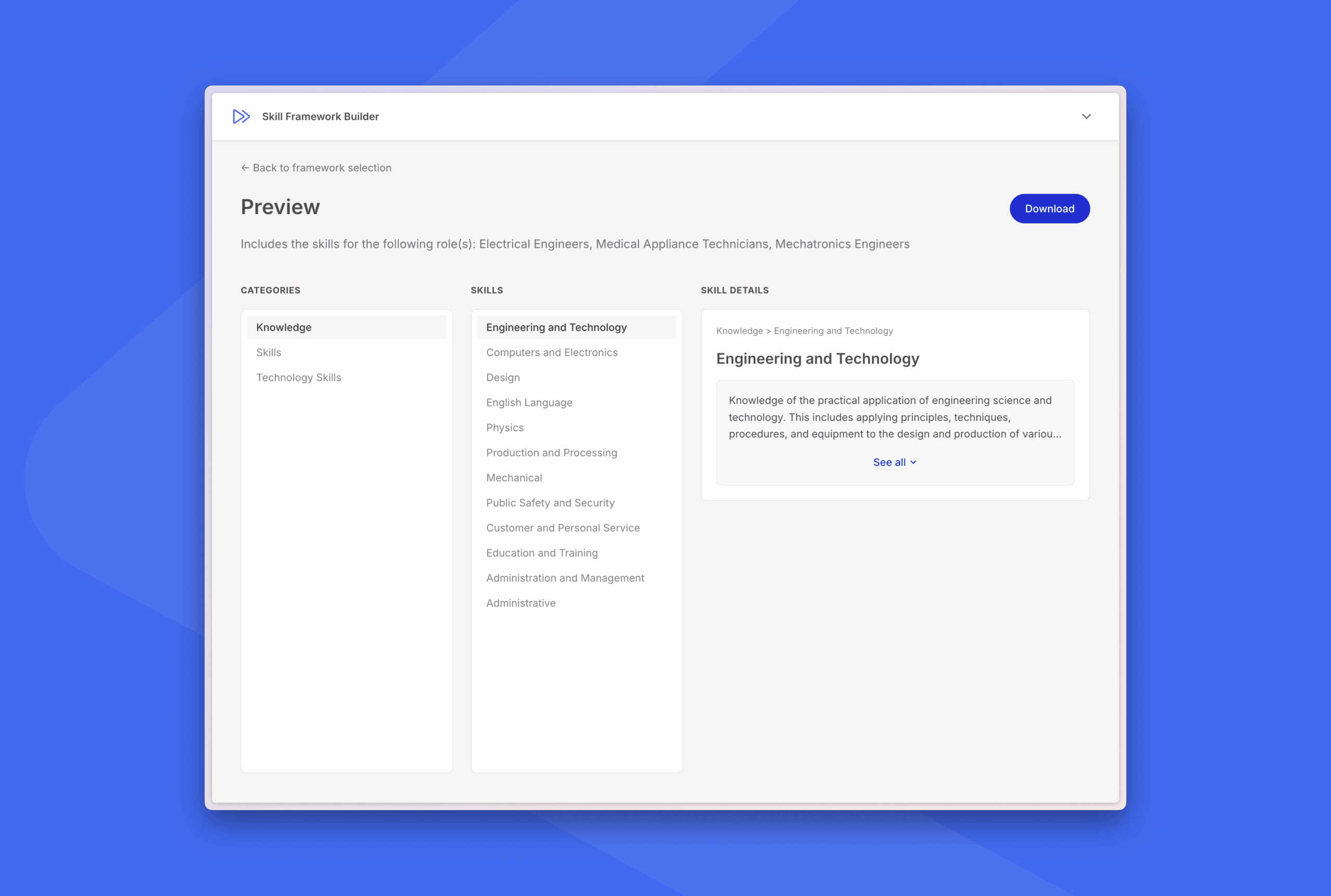
We help you identify evolving skill sets, analyze skills gaps, and act with confidence. Using AI-powered skills mapping aligned to actual project work, we help you adapt faster, plan smarter, and empower your workforce with clarity. Start using data-driven insights today to turn your human capital into a measurable strategic advantage.