There’s never been more pressure for organizations to respond rapidly to technological advances and ever-changing market needs. To stay competitive, you must equip your teams with the skills needed today while preparing for future demands. That’s why mastering skills management is vital.
Skills management used to be seen as a mere requirement for ISO 9001 compliance, but it’s so much more than that. When effectively implemented, strong skills management helps you recognize your team’s skill set, plan resources efficiently, and support staff development.
The days of using Excel spreadsheets to manage skills are long gone. As skills become outdated faster and more knowledge is required than ever, it’s crucial to embrace modern tools – like the evolving skills matrix – to tap into talent marketplaces and stay ahead of the competition. With the right system in place, you can identify gaps quickly, align your team’s abilities with business goals, and unlock new opportunities for growth.
Here’s what we’ll cover in this guide:
- The key steps for effective skills management
- How we help technology leaders in manufacturing embrace modern skills management and boost project effectiveness
The six key steps for successful skills management
Follow these critical steps to master skills management and build a skilled, flexible workforce that drives your business forward.
It’s important to start any skills management initiative with a clear scope. First, identify your target business function, then decide who’s participating. Whether you’re going organization-wide or starting small with a team or two, a defined scope ensures you build a team with the right skills.
For example, if your focus is on production teams in a manufacturing environment, ensure you outline the specific areas you want to evaluate. Will you be addressing technical skills, leadership abilities, or both? By narrowing your focus, you can collect the most relevant data and allocate resources effectively.
Recognizing your requirements from the start allows you to collect high-quality data and make informed decisions that bridge skills gaps and support talent mobility.
For example, ask yourself:
- Are proficiency levels necessary for all skills?
- Should assessments be qualitative, quantitative, or a mix of both? While proficiency levels are critical for resource planning and ISO 9001 compliance, they might be less relevant for personal growth initiatives.
Self-reported data can bring bias, so consider adding manager feedback, 360-degree reviews, or external assessments to ensure accurate results. These additional layers of validation create a more robust and trustworthy dataset that you can rely on when making key business decisions.
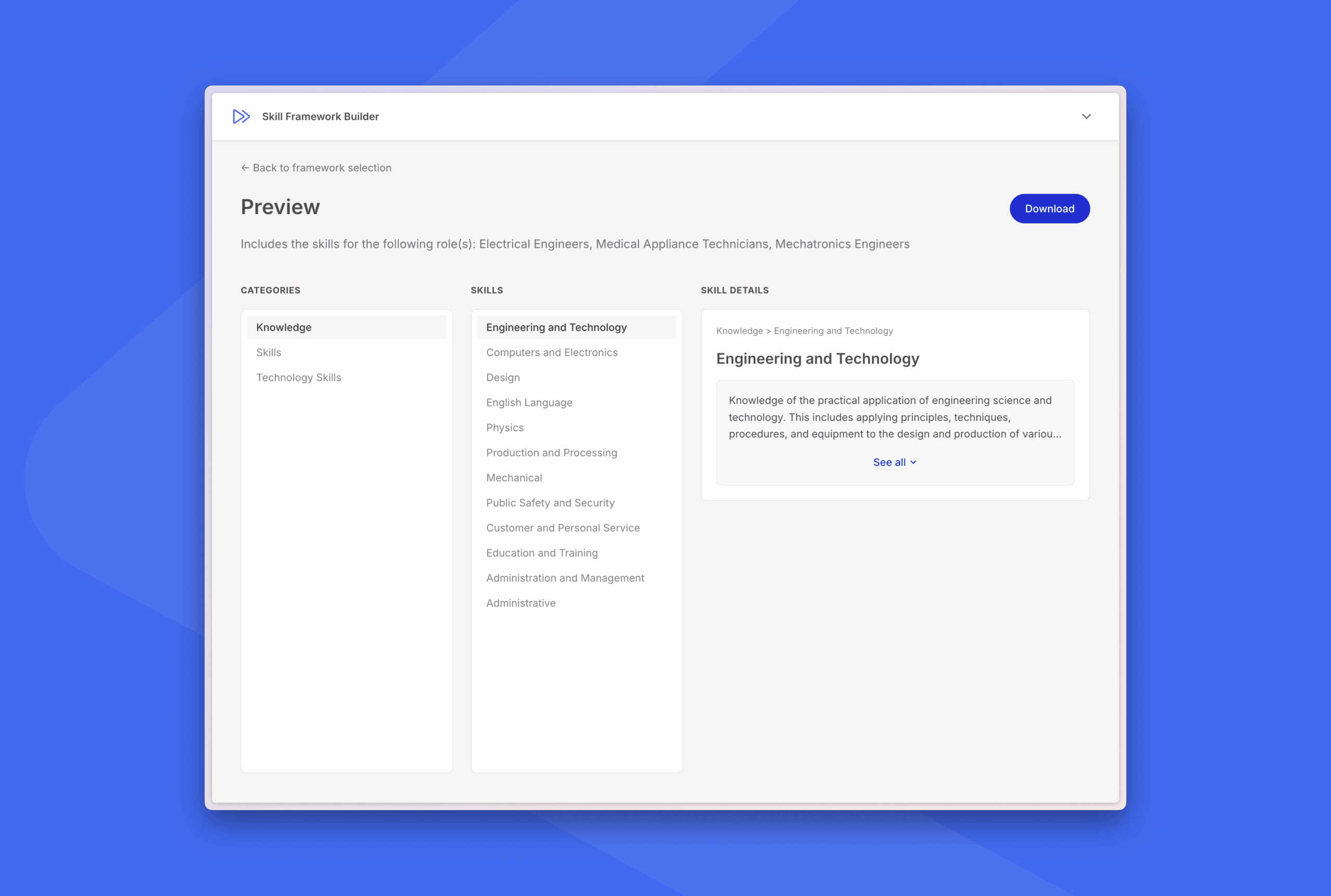
A well-constructed skills framework provides structure, outlines essential skills, and helps you assess participants. Create one tailored to your needs or use a third-party framework like SFIA to save time.
Tailoring the framework to your business ensures it aligns with your goals and reflects the unique demands of your industry. For instance, a manufacturing firm might prioritize technical certifications, while a tech company may focus on software proficiency and innovation capabilities.
Keep the framework concise to avoid overwhelming participants, but let them report unique skills used in their roles. This ensures your data remains up-to-date and relevant for internal talent searches or external hiring initiatives.
Whether using surveys or evaluations, the assessment methods you choose for participants should align with your data quality strategy. For instance, you could create and distribute a skills framework survey to participants using tools like Microsoft Forms or specialized HR software. These tools streamline the process, making it easier to collect, organize, and review data efficiently.
Remember to balance simplicity with detail. Overly complex assessments can lead to low participation rates, while overly simple ones may lack the depth needed for actionable insights.
Once collected, the skills data needs to be analyzed. Software tools like PowerBI turn raw information into clear visual insights. Use it to pinpoint skills gaps in your teams and generate insights for talent marketplace initiatives.
For example, if your data reveals a shortage of project management skills across key departments, you can prioritize training programs or recruit individuals with those abilities. This proactive approach ensures your business stays agile and competitive.
Accurate skills data reshapes operations. Use it to streamline resource planning, leverage internal expertise, and encourage professional growth.
In sectors like manufacturing, where ISO 9001 compliance is vital, effective use of skills data can secure a competitive edge. For example, identifying underutilized skills within your team might lead to innovative problem-solving or new business opportunities.
Simplify your skills management
We simplify skills management with practical, modern solutions for the talent marketplace:
- Connected Data: We combine input from top-down surveys with skills added by employees. Our data is organized like a knowledge graph for context and scalability.
- Action-Based Insights: Instead of relying on traditional methods, we track what people can actually do in their specific domains – tracking abilities like “leading a cross-functional project” or “mentoring peers.” These insights support talent mobility and team planning.
- Flexible Assessments: We support self-reporting, manager feedback, 360-degree reviews, and third-party assessments, helping you focus on your most pressing needs.
By embracing effective skills management, you’ll create adaptable teams ready to meet modern challenges. With Zipteam’s tools, you can turn skills data into a strategic advantage.