In today’s digital and AI-driven world, employee skills are more than just credentials on a resume. They’re the building blocks of high-performance operations and successful business innovation. Yet, many organizations still struggle to manage and deploy talent efficiently. Teams are misaligned. Expertise is overlooked. And when critical people leave? The disruption is massive.
In this article, we’ll get some insights from our founder, Daichi Yoshikawa, an engineer by trade, about how you can redefine the way you understand, manage, and activate workforce capabilities using our revolutionary skills management tools. We’ll also look at the role of internal talent marketplace platforms in supporting individual development and how we’ve tailored Zipteam to be two steps ahead of the movement towards a skills-focused culture.
What happens when you misunderstand talent?
During his time in engineering, Yoshikawa observed the all too real problem of talent mismanagement. “Engineers were rotated arbitrarily,” he recalls. “Just because someone is labelled as an ‘engineer’ doesn’t mean they’re the right fit for every technical task. It’s like assigning a Thai street food chef to a French fine dining restaurant.”
This scenario plays out in business daily, particularly in large organizations where the nuance of an employee’s true capabilities is often lost in translation. “After all,” Yoshikawa reminds us, “people typically have a limited understanding of professions outside their own.” The result of this misunderstanding is underperformance, frustration, and a lack of innovation.
Letting employee skills management software tell the story instead.
When building Zipteam, we wanted to focus on creating a leading skills management platform that provides clarity rather than adding to the confusion.
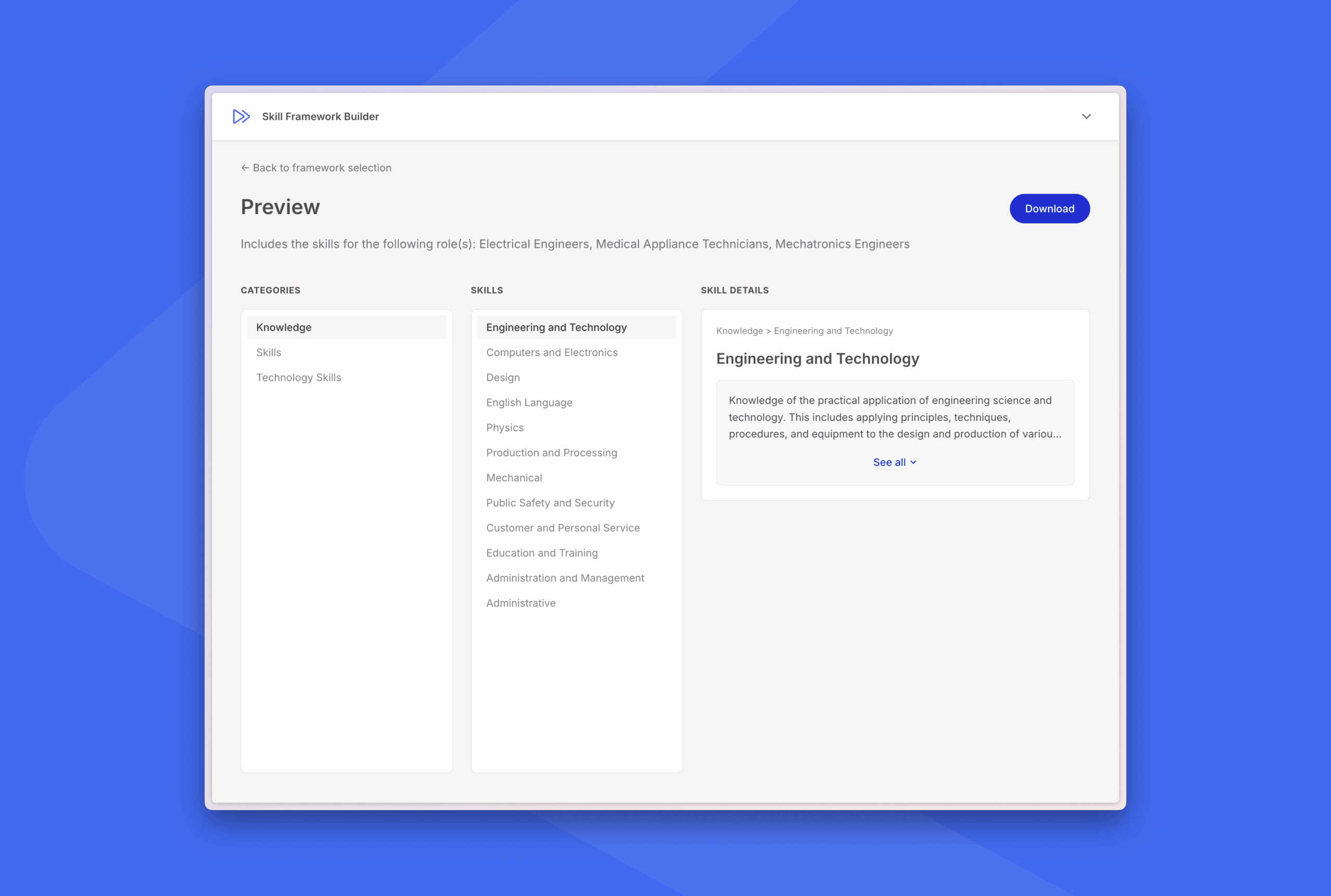
That meant developing skills management tools that enable individuals to input their own capabilities, painting a picture for management and leadership teams that can be easily visualized across multiple departments.
Yoshikawa puts it this way: “You can hand someone a toolbox, but if they don’t know what to do with it, it’s useless. Zipteam gives people the context to act on what they see.”
That’s where our Team Up feature comes in, a two-step-ahead innovation that goes beyond skills visualization to offer intelligent team-building and fully functional talent mobility solutions that evolve with your workforce. Put simply, this is future-proof software for a landscape that still hinges on human intelligence for innovation.
How is Zipteam different from traditional skills management tools?
The key difference is that traditional skills management tools are developed for HR departments to use, not the entire organization. As Yoshikawa notes, “most skills management software fails because it tries to centralize everything in HR. But the people who really understand skills are the individuals and their managers.”
As a modern internal talent marketplace platform, Zipteam allows skills and expertise to be searched for, surfaced, and activated across silos. It empowers managers to make informed decisions and employees to take control of their career trajectory. Unlike bulky legacy software or traditional tools like spreadsheets, Zipteam provides:
- An advanced skills management system where individuals tell the story of their own capabilities
- A user-focused design philosophy that helps organizations scale and supercharge innovation
- A way to cultivate cross-department collaboration
Supporting CXOs, executives, and individuals.
Leveraging advanced skills management software doesn’t just add value for your organization. It supports everyone, from executives that gain a macro-level view of skill distribution to department heads who can restructure quickly when someone leaves. Meanwhile, individuals can advocate for their skills in real terms, as opposed to abstract performance reviews.
“In traditional systems,” Yoshikawa explains, “users are often asked to input tons of data without getting anything back. With Zipteam, employees get value too, they can showcase their strengths, correct misperceptions and steer their careers.”
Skills management software in the future of work.
As your organization grows, complexity grows with it. More employees mean more skills at your disposal but also more unknowns, which is why any skills management software must have the capacity to scale. An advanced skills management system like Zipteam enables new ideas to flourish. Otherwise, as Yoshikawa notes, “people collaborate exclusively with colleagues they’re already familiar with.”
The rise of hybrid and remote teams, AI, and shifting work-life-balance dynamics means efficient talent management is more important than ever. But at Zipteam, we understand that adoption won’t happen overnight. That’s why our skills management platform is designed to support managers in taking the first initiative. Our real use cases, from issues with team turnover to enhancing cross-department communication, show that it can help you build momentum where it matters most.
Ready to leverage skills management software?
Internal talent marketplace platforms are no longer just ‘nice to have.’ They’re strategic infrastructure for businesses where innovation is essential. From executives to team leaders and individual employees, Zipteam offers clarity, structure, and mobility, building teams with the skills needed to win.
Learn more about our advanced skills management system here, and book your demo today.