Imagine you are part of a Sioux hunting party 1000 years ago. Your encampment has been tracking the migrating Bison herd for weeks. The day of the big hunt has finally come. Everyone is excited, the hunters have encircled the herd and are about to charge, and THEN …the 5pm whistle blows. The hunt is stopped, everybody goes back to their camp. Hopefully the Bison will still be there at 9am tomorrow, and there won’t be any trouble with the commute.
The 9 to 5, year-round model may have its uses, but it certainly wouldn’t have worked out so well for hunter gather societies. As the saying goes, gather ye rosebuds while ye may! I can’t picture it working out so well for farmers either, at least in the Northern Hemisphere, who must make hay while the sun shines. That, said, surely the 9 to 5 has its benefits. Robert Owen, the 19th century social reformer said it best: “8 hours labor, 8 hours recreation, 8 hours rest”. Now, Owen was fighting for workers’ rights, and stopping the exploitation going on in the factories at the time, but think about it…most of us have structured our lives around something resembling this idea; in fact, hasn’t most of Western society been structured around the 9 to 5 model for the last 150 years or so?
I’ll save the sociological commentary, but why don’t we explore the whole idea of where the 9 to 5 came from. Clearly it didn’t make always make sense to live and work this way. The big question is, does it make sense now? And will it make sense in the future?
How We Work
Humanity hasn’t just spent our history developing new tools and technology for work, we have also evolved and adapted the very way in which we approach our work to begin with. Technology isn’t just about the tools we use, it’s about when and how we use them. History shows how as one adapts, so must the other. As a matter of fact, as some key moments, the way humanity approached work has changed so fundamentally, impacting all aspects of life so completely, that we named a Revolution after it! Let’s take a look at two of them.
The “Agricultural Revolution” (aka the Neolithic Revolution) happened around 10,000BC when a large-scale transition from our hunter-gatherer roots to settled agricultural communities took place. People could stay put, so to speak, and not due to travel restrictions! People domesticated plants and animals, leading to something that continues to this day…farming!
The impact on work, and all of life, was enormous: permanent settlements, surplus production, specialized labor, and more. Many historians argue that the Agricultural Revolution paved the way to complex societies, trade, town centers…essentially foreshadowing civilization as most of us know it today!
As much as I’d love to cover the Early Civilizations (Mesopotamia, Egypt, China, etc.), the Bronze and Iron ages, Classic Antiquity, Feudal agrarianism, Craft Guilds, the Commercial Revolution, and countless other episodes in the story of human life and the evolution of work, I’ll have to fast forward to the mid-18th century Britain. This was the dawn of mechanization, advanced manufacturing and machinery, steel power, factories, early automation, and countless other examples…does this sound familiar?
The Industrial Revolution was arguably the most pivotal work-related technological advancement since the Agricultural Revolution because it fundamentally transformed not only how work was done but also reshaped all aspects of life and civilization. The innovations introduced in this time period transformed economies and whole societies from agrarian-based to industrial-based. Cities were not only the centers of commerce and government, as they had been before, they were now the center of bustling factories, and filled with employment opportunities.
Some historians argue that the “Industrial Revolution 2.0” continued into the 20th century, with the pièce de résistence being Henry Ford’s assembly line, a concept that has been almost universally adopted in the manufacturing world. Have you ever been to a well-staffed Subway at the lunch rush, and seen how those sandwiches fly through the “assembly line” of sandwich artists? Thank Ford and the Industrial Revolution for that idea!
The infamously harsh working conditions in factories gave rise to the labor movement, and thanks to brave folks like Robert Owen, shorter workdays. And voila! Here we are with the 9 to 5 work model, something most of us know all too well. Did you know it’s called the factory model? This is what was used with the mass rise of office work that occurred in the late 19th to early 20th centuries and grew dramatically after World War II. Funny to think of all of us white collar office folks working “the factory model” as we typed away on our computers/typewriters and stored our files in the…cabinet (or cloud). As much as I’d love to hear the “ding” at the end of the line, I can’t imagine life without a backspace button.
Now there’s one other key element to the factory model, besides the 8-hour day, 40-hour workweek we all know (and love?). Whether you worked in a factory or office, not only did you probably work at the same location, with roughly the same hours, you probably had a defined set of tasks and responsibilities, and a manager whose job it was to make sure you did them properly. You probably got paid a pre-agreed amount, whether an hourly wage or annual salary, to perform your work, and maybe got something extra if you exceeded expectations.
Does this sound familiar to you? It’s certainly been my experience. And do you know what we call this? Sure you do! A job (pronounced j-a-w-b, unlike the Old Testament figure).
The whole concept of a job is a role-based approach to work. While some jobs may offer more flexibility and autonomy than others, the essential tasks, responsibilities, time commitments, and compensation are typically pre-established. Just look up a job ad on LinkedIn and you’ll still see the framework we all recognize so well: job titles, descriptions, reporting managers, tasks and responsibilities, work schedules, locations, work conditions, and so on. Jobs are typically organized within a hierarchical company structure, characterized by a chain of command and top-down decision-making. If this is ringing some military bells, it’s by design! Though they did away with the ‘LEFT RIGHT LEFT’, management theorists and corporate leaders in the late 19th and 20th centuries were deeply influenced by military organization, and its prioritizing efficiency, structure, and control.
Role-based jobs are the only work model many of us have ever known, rooted in the factory model, and shaped by the Industrial Revolution. While this concept has taken on various forms, including the mass rise of remote work during Covid, the underlying premise of the ‘role’ has remained relatively consistent. To be clear, this model has certainly served its purpose, and still does purpose—and continue to do so. But is this still the best model for the contemporary workforce in the Digital Age?
The Digital Age
While the Industrial Revolution continues to shape our daily lives, a new revolution began roughly 70 years ago: the Digital Revolution. This era has ushered in groundbreaking advancements—computers, microelectronics, telecommunications, networking, the internet, Big Data, mobile technology, cloud computing, social media, e-commerce, the Internet of Things (IoT)—and, of course, today’s biggest buzzword: AI.
As the Digital Revolution continues to unfold, who knows? Perhaps historians and blog writers 1,000 years from now will view it as a defining chapter in human history, on par with the Agricultural and Industrial Revolutions.
We’ve seen how individuals and whole societies have adapted their work to the conditions of the era, from the Agricultural to the Industrial Revolution. And we’ve witnessed incredible technological evolution, even within the last decade. But what does all this mean for the future of work and the traditional role-based job?
As we grapple with these rapid technological advancements and shifts in how we work, it’s becoming clear that we’re at the early stages of a fundamental change. The traditional role-based work model struggles to keep up with the fast-paced developments in technology, societal changes, market conditions, customer expectations, workforce dynamics, global competition, and access to talent. These factors have sparked an unprecedented demand for organizational agility and flexibility—needs that the traditional role-based ‘job’ is increasingly ill-equipped to meet.
Organizations are realizing the limitations of traditional role-based work and evolving to a skills-based workforce and project-based work.
Project-based work is well-suited to today’s dynamic business environment, enabling organizations to address specific needs with targeted expertise and flexibility. Unlike traditional role-based work, which relies on fixed tasks and responsibilities, project-based work focuses on assembling teams with the precise skills required for each initiative. This approach allows for rapid adaptation to changing conditions, ensuring that the most relevant talent is applied to each task, fostering innovation and efficiency.
While traditional roles may include project components, project-based work emphasizes the temporary and fluid nature of team composition, aligning directly with the specific needs of the endeavor. This shift reflects a growing preference for agile methodologies over rigid processes, enhancing responsiveness and driving better outcomes in a landscape characterized by continuous, rapid change and complexity.
A skills-based approach is crucial for maximizing the effectiveness of project-based work, as it ensures that the right expertise is matched to each project’s unique requirements. By prioritizing specific skills over traditional job titles, organizations can more effectively deploy talent, increasing their ability to solve problems and achieve breakthroughs. Project teams formed through careful skills identification and matching outperform those with less emphasis on skills, combining complementary strengths to enhance team impact and innovation.
This approach also enhances flexibility and adaptability, allowing teams to pivot as project needs evolve. By aligning specific skills with project demands, organizations can swiftly respond to changing conditions, fostering innovation, and maintaining a competitive edge in a dynamic marketplace. Together, these strategies create a work environment where resources are optimally aligned with goals, enabling organizations to navigate challenges and capitalize on opportunities with greater agility and precision.
It’s important to recognize that a skills-based approach extends far beyond project team formation or internal talent management. A Skills-Based Organization (SBO) organizes its work and workforce around the capabilities of its people, focusing on skills and potential rather than rigid job titles or roles. This approach influences recruiting, internal talent management, learning and development, compensation, and more (Bersin, 2020[1]). However, since this is a massive topic in itself, I’ll save it for another blog post!
In a word: No. There are many scenarios where a traditional role-based job structure remains the best approach, much like the 12,000-year-old seasonal work model still has its place. We’re also not at a point where we could, or should, completely abandon role-based work. Instead, what’s needed is a thoughtful adaptation—integrating project-based and skills-based approaches where they make sense. These new models come with their own limitations and imperfections, which we’ll explore in future blog posts, including strategies to overcome them 😊. The key is to gradually evolve and implement work strategies that best align with the realities of our rapidly changing environment, rather than flipping a switch overnight.
Zipteam
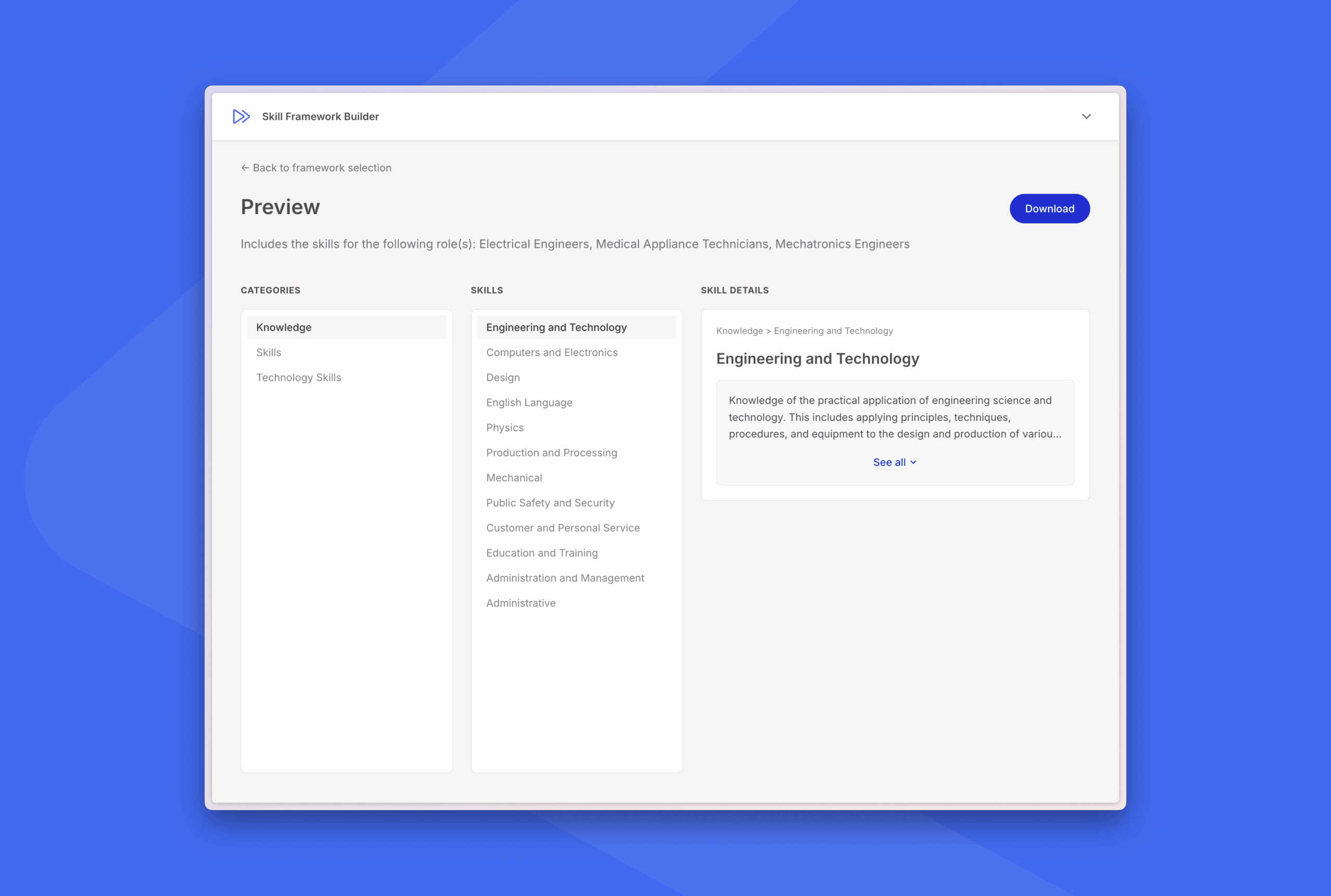
At Zipteam, we recognize that the shift towards a more agile and flexible approach to work is unfolding gradually. We’re here to guide organizations through this transition by providing a practical solution for adopting a skills-based, project-based approach to work. Our platform enables individuals to map out their skills, creating a ‘brain map’ of the organization, division, department, or group. This data is then used to form optimized project teams, enhancing their ability to drive innovation, adapt to changes, overcome obstacles, and effectively navigate the rapidly changing landscape.

We’re still relatively early in this new era of work, and change will take time. But this doesn’t have to be an all-or-nothing decision! Zipteam offers a way to explore new approaches and put innovative ideas into practice. We encourage companies to start small—have some of your team members input their skills and explore the individual and organizational skills maps. Input one of your upcoming projects and break it down by the skill sets needed to execute it. Let our matching software and AI take over, presenting you with the best options available. Build your first dream team with Zipteam, and watch as they ignite innovation, solve problems, and achieve breakthroughs!
[1] Bersin, J. (2020). The rise of the skills-based organization. Josh Bersin. Retrieved from https://joshbersin.com